Confidential USDC payments: Raycash opens a private beta on Ethereum
The app uses Zama's protocol to encrypt balances and transaction amounts recorded on Ethereum. Access will open in stages during the closed beta.
 By Redacción Crypto InformaReading time: 3 min
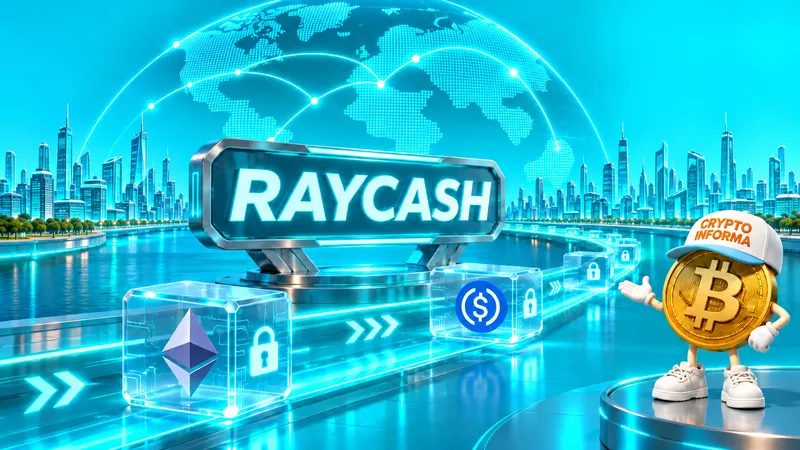
On November 9, Raycash opened a private beta for confidential USDC payments on the Ethereum mainnet. The app, which grew out of the Zama privacy protocol, starts with limited access and will open in stages. The project says it can record a payment on the public network without exposing an account balance or transfer amount to any observer.
The first supported currency is USDC, a token that aims to track the US dollar. Users can convert it into a confidential representation on a one-to-one basis within the system. According to the product description, the underlying USDC can be recovered by reversing that conversion. Crypto Informa's stablecoin guide explains the differences between the token, the network and the service provider.
What information is encrypted?
The app uses fully homomorphic encryption, a technique that makes it possible to perform operations on encrypted data without exposing its contents during computation. This lets the network process balance changes while the amounts remain encrypted. The transfer is still recorded on Ethereum. The product aims to distinguish itself through which details of that transaction are visible to third parties.
Raycash uses ERC-7984, a draft interface for confidential tokens on Ethereum. The proposal describes how to represent amounts and balances using confidential references and how to allow operations on those values. The mechanisms for resolving those references depend on the implementation. The standard's name alone therefore does not tell you what a user, provider or third party can see.
According to the project, the wallet lets users control their assets and grant viewing permissions to specific people, such as an accountant or auditor. That access control matters when someone needs to disclose an amount for verification without making it public across the network. Confidential USDC payments protect certain data under the described design. The visibility of other data depends on the transaction and the services involved.

What changes for senders and recipients?
Raycash says users can request payments through links and that it handles Ethereum fees in the background, so users do not need ETH in their wallets to pay those fees. The app is designed to support deposits by card, bank transfer or stablecoin, and withdrawals to bank accounts. The availability of each channel will depend on access and service terms.
The project also integrates a yield option through Morpho. That feature introduces a separate interaction with a protocol and a different set of risks. It is worth distinguishing between holding a balance, transferring it and allocating it to a yield strategy. Ethereum smart contracts execute rules defined in code, and each app adds its own terms.
What the beta still needs to show
The limited beta makes it possible to observe how confidential USDC payments work in real Ethereum transactions. Assessing their usefulness in Latin America will require knowing which countries and payment methods are supported, what each user will pay and how local-currency withdrawals will work. The phased rollout does not set a date for general access.
The launch matters because it offers an alternative to publicly exposing balances and payment amounts in stablecoin transactions. Understanding the limits of that protection will require distinguishing what remains encrypted on-chain, what permissions each user grants and what information intermediaries require when a transaction involves a card or bank account.
Tags
This is information, not financial advice. Before deciding, compare sources and consider your own situation.