Securitize and Stellar plan to expand infrastructure for tokenized assets
The agreement announced at Meridian 2026 seeks to add another network for institutional managers. Supported assets and deployment details will follow.
 By Redacción Crypto InformaReading time: 3 min

Securitize and Stellar announced an integration plan to expand the networks available for issuing and managing tokenized financial assets. The initiative was presented on October 28 during Meridian 2026 in Lisbon. Its scope is infrastructure: it seeks to offer another blockchain option to institutional managers working with traditional financial products.
The official announcement describes a planned integration and says details of supported assets will be announced later. It does not report an immediate launch of all Securitize funds on Stellar. This distinction separates the technology agreement from a product's actual availability to investors.
An additional network for managers
Tokenization represents rights to an asset through digital records that can circulate on a blockchain. Applications can include fund shares, debt and other securities. Technology changes recordkeeping and some operations, but holders' rights still depend on the instrument, its issuer and its legal documentation.
Securitize develops infrastructure for that process and works with managers including BlackRock, Apollo and Hamilton Lane. The company reported approximately US$ 5 billion in tokenized securities on its platform as of September 30. This measures the scale of its overall business, rather than an amount allocated by the announcement to the future Stellar integration.
The Securitize and Stellar plan forms part of a multichain strategy. For a manager, alternatives can allow infrastructure choices based on distribution, processing and compliance needs. However, two products using blockchain does not mean they can be freely transferred between each other or share the same access conditions.
What Stellar contributes to the project
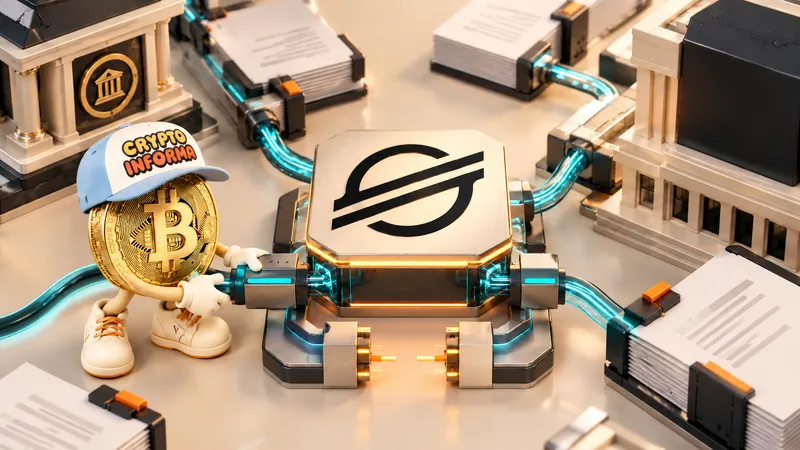
Stellar is designed for asset transfers and financial services. Its infrastructure supports customer identification tools and certain controls over issued assets. These functions matter when an instrument has authorization requirements, jurisdictional restrictions or obligations that must remain in place when its records move to a public chain.
Technical controls do not replace legal ones. A tokenized asset may require eligible investors, authorized intermediaries and a clear relationship between digital records and the issuer's register. For institutions, integration must support those processes as well as offer a new distribution channel.
The agreement comes to an ecosystem already hosting financial use cases such as Franklin Templeton's tokenized money market fund and MoneyGram transfers. These are examples of Stellar use, rather than new products announced by Securitize or guarantees that all will participate in the planned integration.
What remains before its impact can be measured
The next step is learning which assets will be offered, under what conditions and from what date. Without those details, future volumes, assured liquidity or automatic access for every country cannot be attributed to the initiative. The announcement expresses a development intention whose outcome depends on implementation.
For businesses and professionals in Latin America, the news adds a case of convergence between regulated markets and public networks. Its usefulness will depend on concrete issues: custody, reconciliation, participant eligibility and settlement capacity. These determine whether digitization simplifies a transaction or adds another layer of complexity.
The Securitize and Stellar initiative expands the infrastructure landscape for institutional tokenization. The central development is the integration plan; assessing results must await identifiable products, access rules and verifiable activity. This distinction between announcement and deployment will be key to tracking its progress.
Tags
This is information, not financial advice. Before deciding, compare sources and consider your own situation.