Binance and Polymarket propose fund recovery on Polygon through a hard fork
The proposal covers about 70.49 million POL blocked after two attacks. It requires approval and testing; there is no confirmed activation date yet.
 By Redacción Crypto InformaReading time: 3 min
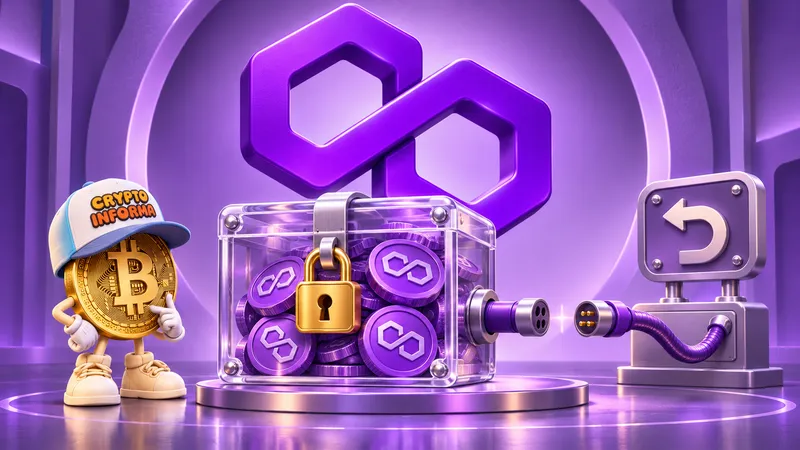
Binance and Polymarket are backing a proposal for fund recovery on Polygon covering approximately 70.49 million POL, valued at about US$6.8 million in coverage published on November 5, 2026. The tokens remain in five addresses linked to separate security incidents.
Block producers have already applied restrictions to prevent transfers from those addresses. That did not return the assets to their owners: the proposal calls for a coordinated change to the network’s rules, known as a hard fork, to move the balances to verified recovery wallets.
An exceptional change still subject to approval
The proposal was published on November 4 in the governance forum. It covers about 23.86 million POL across four addresses associated with Polymarket and about 46.63 million in one address linked to Binance. The dollar estimate is indicative and varies with the price; the scope is expressed in tokens.
The proposed mechanism would set the native balances of the listed addresses to zero at a future block and credit the same amounts to designated recovery addresses. POL’s total supply would not change. Nor does the plan seek to recover every asset lost in both attacks: the accounts and asset involved are specifically defined.
The plan requires governance approval and rehearsals on Amoy, Polygon’s test network. Discussion was scheduled for November 5. At the time of the information reviewed, no mainnet activation date had been confirmed, so the return of funds should not be presented as completed.
Why blocking an address does not resolve the return of funds
Polygon uses Bor as its block production layer. Its documentation explains that validators elect producers through stake-weighted votes and that an assigned producer seals blocks during a specified interval. These components coordinate the chain’s progress; they do not, on their own, turn a block into a refund.

The documentation also distinguishes block production from synchronization with Ethereum. Events emitted on Ethereum are observed by Heimdall and subsequently incorporated by Bor. That architecture helps explain why a state change must specify which component changes and which retain their functionality.
In this case, the proposal focuses on native POL balances. Fund recovery on Polygon would depend on a special protocol rule, rather than an ordinary transfer signed with the key of whoever currently controls each address. That is the central difference between preventing funds from moving and changing their destination.
The text asks Binance and Polymarket to demonstrate control of the receiving wallets and confirm ownership. It also calls for balances to be read again before execution. Those steps seek to prevent a recovery operation from sending assets to an incorrect or compromised account.
The debate over precedent
The proponents describe the intervention as exceptional and limited to publicly acknowledged events, traceable funds and a closed list of addresses. That justification should not be confused with creating a general power to move user balances. Approving a specific change and enabling a permanent mechanism are different decisions.
Fund recovery on Polygon also requires operational coordination: a consensus change needs compatible software and preparation by participants. Testing must verify that supply is preserved and that the transfer stays within its defined scope before any eventual upgrade reaches the network used by the public.
For users, the verifiable outcome for now is the reported blocking and the existence of a formal proposal. Approval, software release and execution at a specific block remain separate steps. Until they are completed, the POL involved cannot be counted as assets already recovered.
Tags
This is information, not financial advice. Before deciding, compare sources and consider your own situation.