Paytaca reports two attacks that generated fake orders and payment requests
The Bitcoin Cash wallet detected flaws in two server components. It said private keys remained on users’ devices.
 By Redacción Crypto InformaReading time: 3 min
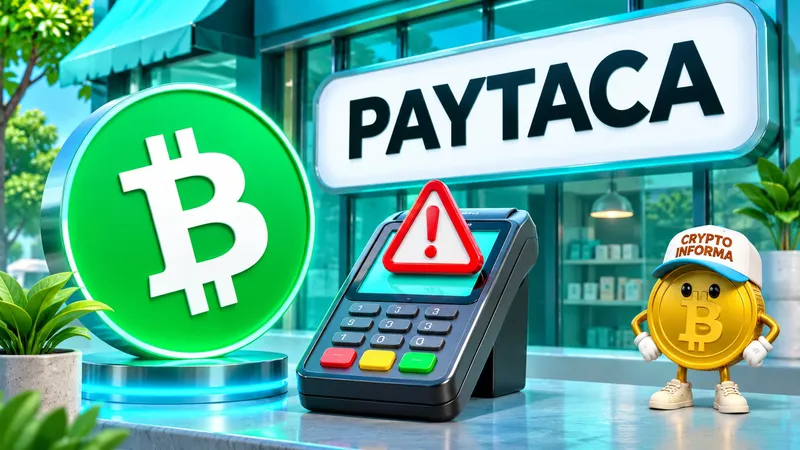
Paytaca, a self-custodial Bitcoin Cash (BCH) wallet, said on Wednesday, November 18, that it had detected attacks on its servers on two consecutive days. The first allowed fake orders to be generated in its peer-to-peer exchange service. The second produced payment requests that nobody had initiated. The company asked users to discard those requests and review the details of any transaction before signing it.
The advisory identifies two affected systems. The platform dated the first incident to Tuesday, November 17, and the second to Wednesday, November 18. In its initial statement, Paytaca reported no confirmed losses and did not specify how many users received alerts, how many fake orders were generated or how many requests received a response. The investigation was still open when the warning was issued.
What happened to orders and payment requests
The first attack exploited a flaw in the servers of P2P Ramp, Paytaca’s peer-to-peer exchange service. Whoever exploited that vulnerability was able to generate fraudulent orders within the system. This affects the trust a user can place in an order displayed by the service, particularly when they do not know how it originated or were not expecting to trade at that time.
The following day, another flaw allowed unauthorized payment requests to be issued. A request presents the details of a proposed payment. When someone authorizes a transfer from a self-custodial wallet, their device uses the private key to generate the signature verified by the network. That distinction explains why the attack on the request system could induce someone to pay without, by itself, giving the attacker control of the wallet.
The warning also matters when a request appears consistent with a routine transaction. If the user does not remember initiating it, Paytaca recommends that they avoid signing it. This review applies both to orders in the peer-to-peer service and to requests that appear in the payment flow.
The incident adds to other cases in which what users see before sending funds is manipulated. In the attack on Optimizely customers’ websites, destination addresses were replaced. In Paytaca’s case, the advisory describes the creation of fake orders or requests in two components of its own servers.
What Paytaca said about private keys
Paytaca said that private keys remain on users’ devices and that its servers do not store them. According to the company, the attacks were confined to the infrastructure supporting the affected services. Self-custody keeps control of signing with the user, but that signature can also execute a fraudulent payment if the person approves a manipulated request.
The company asked users to ignore orders or requests arriving when they have not initiated a transaction, check the destination and amount before authorizing a transfer, and keep any recovery phrase private. Verifying the origin also matters when a request arrives through a familiar channel. The scam involving a fake Elon Musk video detected by Coinbase shows another method of inducing users to authorize a payment.
Paytaca said it is investigating the flaws and strengthening security on its servers. It remains unclear which versions or services were exposed, for how long, and whether any order or request resulted in a payment. Those details will help establish the financial impact of both incidents and which controls the platform will introduce to prevent further fraudulent requests.
Tags
This is information, not financial advice. Before deciding, compare sources and consider your own situation.