Kalshi: judge rejects CFTC bid to halt New York's action
Friday's decision allows the state's claim against the platform to proceed. It is not a shutdown order and does not settle the underlying jurisdiction dispute.
 By Redacción Crypto InformaReading time: 3 min
Kalshi faces a new legal setback: on November 20, federal Judge Lorna Schofield rejected an emergency request by the U.S. Commodity Futures Trading Commission, the CFTC, to temporarily prevent New York from taking action against the platform. The outcome leaves the state enforcement route open, but does not itself order the exchange to shut down.
The decision came after another judge sent Attorney General Letitia James's lawsuit back to New York state court. These are two separate proceedings: one determines where that claim continues, while the other denies emergency protection sought by the federal regulator. Neither should be presented as a final judgment on all event contracts.
The CFTC did not obtain emergency protection
Schofield found that the agency had not demonstrated a sufficient likelihood of success in its argument that federal legislation prevents state gambling rules from being applied to these operators. That is the standard assessed when granting a temporary restraint, rather than a final ruling in the lawsuit between the CFTC and New York authorities.
The agency maintains that Kalshi's contracts are derivatives subject to its exclusive jurisdiction. New York argues that the activities offered require a state gambling license. The conflict therefore goes beyond what a product is called: it concerns who can authorize it and which requirements apply.
Event contracts allow participants to take positions on whether an outcome occurs, from an election to a match. The court record describes yes-or-no positions and notes that Kalshi registered with the CFTC as a designated contract market in 2020. That federal status is real; its reach in relation to state legislation is precisely what is disputed.
The state's request does not amount to a shutdown order in force
On November 19, Judge Vernon Broderick ordered the lawsuit brought by New York to return to state court for lack of federal jurisdiction. In that document, he also stated that he could not rule on a request for protection from Kalshi. Sending the case back does not, on its own, decide whether operations should be suspended.
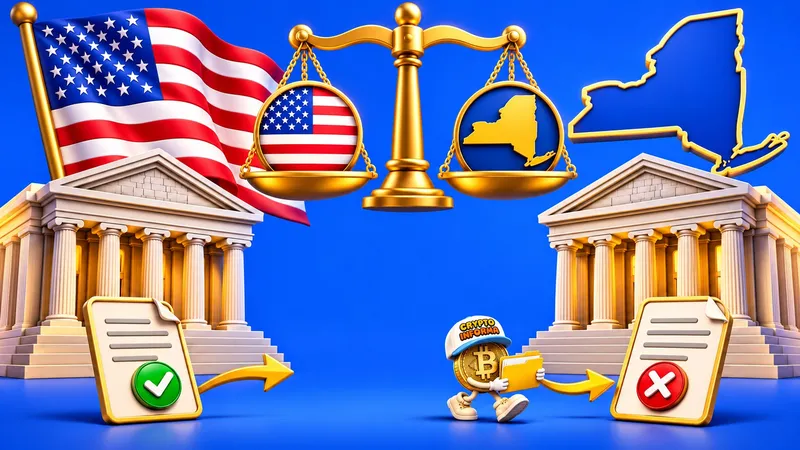
On Friday, state authorities pursued a new temporary measure against the platform. The CFTC sought to block that action through its emergency request. Schofield's rejection leaves the agency without that restraint, but does not automatically turn James's request into an order granted by another court.
Kalshi's location adds to the significance of the conflict: the company is headquartered in New York. The agency argued that a restriction covering operations conducted from the state could affect the entire business. That scope is a warning from one party to the litigation, rather than a nationwide shutdown already ordered.
The platform maintains that it complies with federal rules and is seeking a resolution with state authorities. The company's position must be read alongside New York's claim that it operates a gambling business without the required license. Liability and final measures remain under dispute.
A conflict extending beyond one platform
The case adds to conflicting decisions on prediction markets. Schofield noted that three federal appeals courts had allowed state regulation of Kalshi, while another had prevented New Jersey from acting. The divergence increases the importance of future decisions clarifying the division of authority.
The controversy differs from the legislative debate over which events can be traded. The Senate-approved bill on bets involving death and war addresses product limits; this litigation concerns states' power to enforce their rules.
For those following these markets from Latin America, the distinction matters when interpreting announcements about availability or restrictions. Recent pressure from senators over state-level blocks reflects the same institutional clash. For now, the new development is the emergency protection denied to the CFTC: the underlying dispute and the state's request continue along separate procedural paths.
Tags
This is information, not financial advice. Before deciding, compare sources and consider your own situation.