The JQQQ fund brings the Nasdaq-100 to Stellar through an institutional structure
Janus Henderson and Centrifuge launched a fund seeking to track the Nasdaq-100 under license. Its tokenized shares are subject to eligibility requirements.
 By Redacción Crypto InformaReading time: 3 min

The JQQQ fund brings a Nasdaq-100-linked strategy to blockchain infrastructure. On October 27, Janus Henderson and Centrifuge announced a digitally native vehicle seeking to track that index under license from Nasdaq and launching on Stellar. The development extends tokenization beyond money market instruments and credit.
Its structure matters as much as its technology: it is a fund sponsored by its issuers and managers, with tokenized shares. That does not mean each holder becomes a direct shareholder in every Nasdaq-100 company. Access is limited to eligible investors in permitted jurisdictions, and the announcement states that it is unavailable to US persons.
Who provides each part of the infrastructure
The announcement combines Janus Henderson's investment management with Centrifuge's fund infrastructure and the index license. The vehicle's documentation distinguishes the investment manager from the submanager. To understand the rights attached to a share, those responsibilities and the fund documents matter more than an image of its token.
Nasdaq licenses the benchmark the strategy seeks to track. This does not mean it issues, sells or guarantees the product. The distinction is useful in a market where index, platform and manager brands can appear together and create confusion about who is responsible for each obligation.
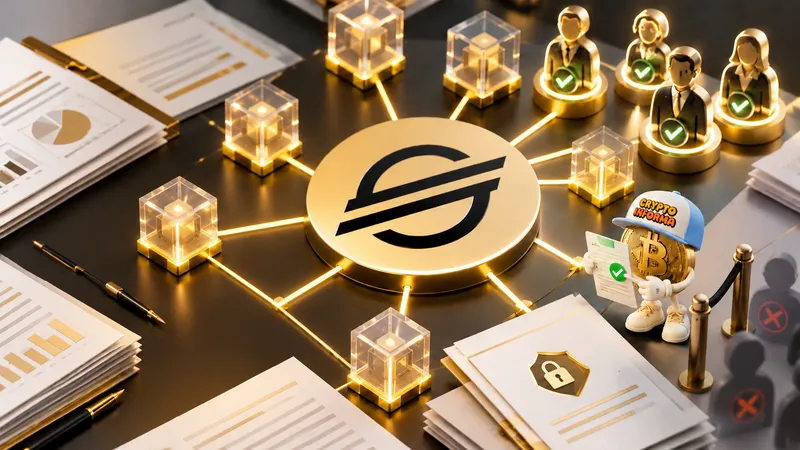
The JQQQ fund launched exclusively on Stellar. Using a public network can facilitate the programming of certain processes and their connection to financial applications, but it does not remove access requirements. The technical ability to transfer a share and the legal right to receive it remain separate matters.
The debate between funds and stock tokens
The launch comes amid growing discussion of digital products representing exposure to traditional securities. Some are issued by managed vehicles; others are third-party instruments that track prices or hold shares in custody. Their rights, counterparties and restrictions are not interchangeable.
In this case, the documentation specifies indirect economic exposure to an underlying product tracking the Nasdaq-100. Holders therefore do not obtain shareholder rights in each company included in the benchmark. There may also be differences between the vehicle's performance and the index it seeks to track.
Janus Henderson reported that its onchain strategies platform exceeds US$ 1 billion across Treasury debt, structured credit and equities. That amount relates to the platform as a whole, rather than an announced initial capital raise for JQQQ. Keeping that distinction prevents attributing an undisclosed volume to the new fund.
What it enables and what remains to be demonstrated
The JQQQ fund shows how an institution can design a product to operate on blockchain from the outset. Its promoters describe potential integration with applications, use of shares as collateral and other functions. The documentation clarifies that certain functions would depend on third parties, regulations and investor eligibility.
For Latin American markets, the announcement provides another case for examining how digital access and legal restrictions coexist. A globally available blockchain does not make a financial product universally accessible. Distribution, custody, subscription and redemption processes must be assessed in each jurisdiction.
The outcome will be measured through the vehicle's operation, its reports and actual adoption of the infrastructure. For now, the verifiable news is the launch and its architecture: a fund linked to a licensed index, issued on Stellar and subject to specific access conditions. Tokenization changes the operating infrastructure; the instrument's risks remain.
Tags
This is information, not financial advice. Before deciding, compare sources and consider your own situation.