United States creates Threat Disruption Center to stop scam payments
The new federal unit connects investigators and companies to interrupt payments and trace funds. TRM Labs will provide the analysis and coordination platform.
 By Redacción Crypto InformaReading time: 3 min
The United States announced the Threat Disruption Center, a unit dedicated to interrupting the transfer of victims' money to foreign criminal networks. The center will operate within the Homeland Security Task Force's coordination structure, with TRM Labs as its primary private technology partner. The initiative was unveiled on November 18.
The new structure addresses an operational problem in digital scams: between a complaint and a coordinated response, funds can move through different services and jurisdictions. Its stated goal is to shorten that interval through information shared between investigators and companies able to take action on payments, websites or accounts.
A shared resource for investigating networks
The center joins the National Coordination Center of the joint task force, led by Homeland Security and Justice. The HSTF brings together more than 30 federal agencies and more than 440 state and local partners. Those figures describe the network the shared resource will serve, rather than the number of employees assigned to the new unit.
TRM Labs will provide technology and infrastructure to analyze information and coordinate responses. The firm explained that its participation aims to connect fraud signals, identify victims and track assets linked to criminal networks. Tracking crypto movements is part of that capability, alongside information about other services used by scammers.
The Block's coverage published on November 19 places crypto fund tracing among the new center's objectives. That work requires connecting movements between addresses with entities that process payments or maintain accounts: observing a blockchain transfer is one step in the analysis, while identifying those responsible requires additional information.
What companies can do and what requires legal proceedings
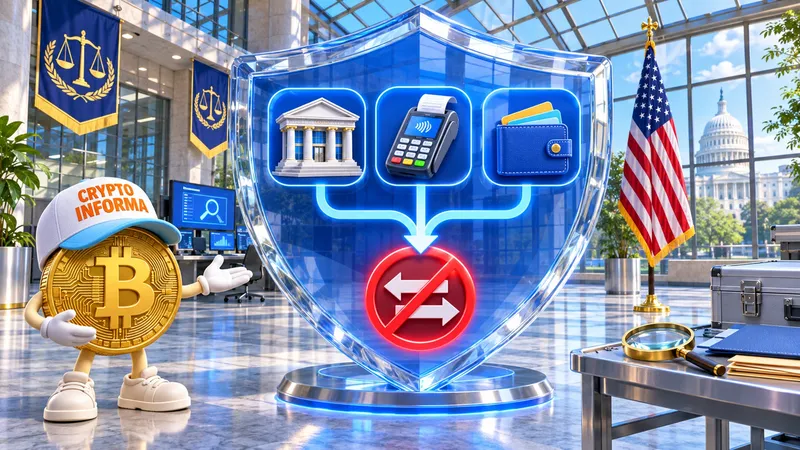
The model provides for a standing channel of collaboration with private organizations. Possible actions include contacting victims, pausing payments, disabling malicious domains and suspending accounts used to carry out scams. Companies can intervene under their terms of service; criminal investigations and court-authorized seizures remain the responsibility of the authorities.
The announcement does not mean that every traced balance can be recovered. Response speed, asset location and cooperation from the receiving service affect each case. The new center seeks to improve coordination on those points, but its launch does not yet provide a measure of recoveries attributable to this unit.
One example of early intervention is the case in which Coinbase stopped US$4.7 million linked to a scam using a fake Musk video. It helps explain why warning a victim and intervention by a platform can be decisive before the money completes its route.
The scope for crypto users
The Threat Disruption Center focuses on networks targeting people in the United States. Its relevance to Latin America lies in the international nature of the platforms and payment circuits used by those networks. That connection does not amount to an expansion of jurisdiction or a regional reporting channel announced by the authorities.
The judicial dimension retains its own role. A U.S. court's authorization to trace assets stolen from Binance provides context on the tools needed when identifying a route taken by funds must translate into action within legal proceedings.
The launch opens an evaluation phase: how many alerts lead to timely measures, how long coordination takes and which assets can be recovered. For now, the verifiable development is the center's creation and TRM Labs' involvement in its infrastructure. Operational results will need to be measured through specific cases.
Tags
This is information, not financial advice. Before deciding, compare sources and consider your own situation.