Is it safe to save in USDT?
Saving in USDT means holding a dollar-linked stablecoin, with risks involving reserves, platforms, networks and conversion to Argentine pesos.
 By Redacción Crypto InformaReading time: 5 min
Saving in USDT means holding a stablecoin designed to track the U.S. dollar rather than holding dollars in a bank account. The reference is 1 USDT per dollar, but the actual price, redemption and availability can vary. Safety depends on the issuer, reserves, intermediary and keys.
What saving in USDT means and what value it aims to maintain
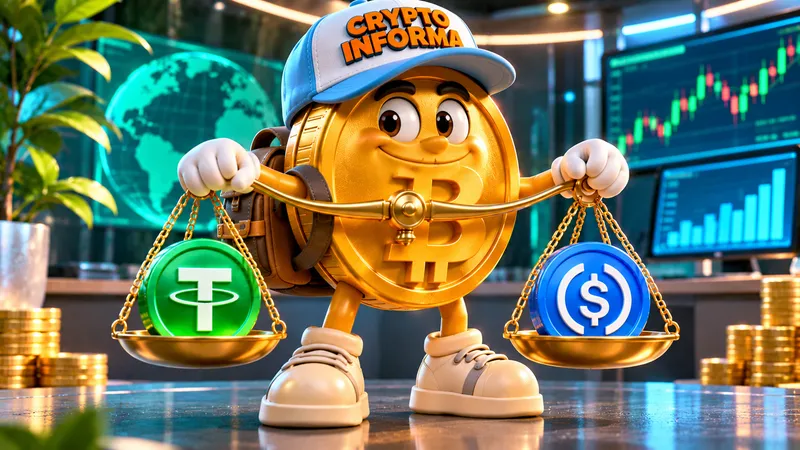
Saving in USDT means holding a token issued by Tether that seeks parity with the U.S. dollar. The reference is 1 USDT per 1 USD, but that does not mean anyone can exchange each token for a banknote at any time or without fees. Secondary-market prices may temporarily diverge from the dollar, and the final rate in Argentine pesos depends on trading conditions.
It helps to distinguish the reference rate, the issuer’s redemption terms and the price offered by a wallet or platform. Tether sets rules for verified customers, minimums and possible direct-redemption fees. Someone who only has an account with an intermediary may depend on its market and withdrawal options. For the general concept and how it differs from deposits, see the stablecoin explainer.
If 1 USDT equals 1 dollar, why do prices differ?
The one-to-one rate expresses the design goal and redemption terms. It does not guarantee execution at that rate for every retail user. Supply and demand in each market, liquidity, fees and perceived risk can move the price away from exactly one dollar. Converting to pesos adds an exchange-rate variable. Two services can therefore quote different amounts in pesos for the same USDT.
Suppose a token is quoted at ARS 1,500. Then 100 USDT would be worth ARS 150,000 before costs. At a resale price of ARS 1,470, the same amount would be worth ARS 147,000. These hypothetical prices illustrate a 2% difference between transactions and do not reflect current or future rates. Crypto dollar exchange rates do not guarantee the price at which an order will execute.
Issuer and reserve risk
Tether says its tokens are backed by reserves and reports what they contain. It published a reserve report as of September 2026 with third-party assurance. Consider the scope: an attestation about specific information and a specific date is not necessarily a full, ongoing audit and cannot rule out future problems. Reserves include asset classes with different valuation, liquidity, counterparty and management risks.
USDT holders depend on the issuer meeting its terms and retaining the ability to redeem. Tether’s public terms say USDT is not legal tender or protected by the U.S. deposit insurance cited there. It differs from cash and bank deposits. Saving in USDT still involves financial risk even though the token aims to reduce price fluctuations against the dollar.
Platform, wallet and network risks
Keeping USDT in a custodial account adds company risk involving withdrawals, cybersecurity, solvency, controls and terms of use. Self-custody involves the risk of losing the recovery phrase, signing a malicious authorization or sending on the wrong network. The platform and the issuer are separate, and an incident at one need not involve the other.
USDT circulates on different blockchains. The address and its format alone cannot establish that a transfer is safe. Identify which network the token is on and whether the destination accepts that exact version. Choosing the cheapest network without checking compatibility is a common mistake. Counterfeit tokens can display the same name, so verify the token contract and what the recipient supports.
How much the outcome can vary in pesos
Someone can hold 200 USDT without any change in the token count, while its peso value fluctuates with the local price. The purchase and sale prices can differ. If a purchase costs ARS 310,000 and selling the same number of tokens returns ARS 302,000, there is still an ARS 8,000 difference. This is a hypothetical example of fees and spreads, not a market rate.
People holding cryptoassets in Argentina also face tax and documentation questions. Treatment depends on the transactions and individual circumstances. See the Argentine crypto tax guide for applicable rules. A peso calculation does not mean the issuer has committed to paying that amount in local currency.
What to review before relying on a stablecoin
Start with the issuer’s terms, reserve composition, reporting frequency, who can redeem directly and which exceptions or freezes are possible. Next, check any intermediary: who holds the assets, what happens during a suspension and how withdrawals are verified. Finally, verify token contracts, networks and secure access to keys.
Saying “saving in USDT is safe” gives an absolute answer to several different risks. The target peg explains the design but does not turn the token into bank money or guarantee constant liquidity. The assessment depends on the risk under review: price, reserves, custody, access or costs.
Frequently asked questions
Is 1 USDT always worth exactly one dollar?
It targets that price, but it can trade above or below one dollar in secondary markets.
Does Tether give dollars directly to any user?
No. Direct redemption is subject to requirements, verification, minimum amounts and the issuer’s terms.
Is USDT insured like a bank deposit?
No. Tether says in its terms that the tokens do not have the banking protections listed there.
Can you lose USDT by sending it on another network?
Yes. If the destination does not support the network used, recovery may be impossible or depend on third parties.
Does saving in USDT prevent fluctuations in pesos?
No. The equivalent in pesos depends on exchange rates and conversion costs.
Tags
This is information, not financial advice. Before deciding, compare sources and consider your own situation.